Teach Like a Champion PDF: A Comprehensive Article Plan
Teach Like a Champion 2.0‚ available as a PDF and ebook‚ provides educators with practical techniques for effective instruction.
It details 19 techniques‚ grouped into sections focusing on checking for understanding‚ fostering a positive learning environment‚ and robust lesson planning.
Accessing online video content requires registration through www.teachlikeachampion.com‚ enhancing the learning experience with visual demonstrations.
Teach Like a Champion‚ authored by Doug Lemov and published by Jossey-Bass‚ represents a cornerstone resource for educators seeking to refine their practice. The book‚ available in PDF and ebook formats‚ isn’t a theoretical treatise‚ but a collection of 62 concrete techniques distilled from observing exceptional teachers at Uncommon Schools.

Its core premise revolves around the idea that effective teaching isn’t solely about content knowledge‚ but about the skillful execution of specific‚ observable practices. The 2.0 edition builds upon the original‚ offering updated strategies and expanded insights.
The PDF version facilitates easy access and portability‚ allowing teachers to readily consult techniques during planning and reflection. Registration on the official website unlocks supplementary video content‚ further enriching the learning experience.
Overview of the Book’s Core Principles
Teach Like a Champion centers on the belief that exceptional teaching is a skill set‚ honed through deliberate practice of specific techniques. The book’s principles emphasize high expectations for all students‚ coupled with a rigorous approach to checking for understanding.

A key tenet is the importance of academic ethos – creating a classroom culture where intellectual rigor and effort are valued. This involves techniques like “No Opt Out” and “Right is Right‚” fostering a commitment to accuracy and participation.
Furthermore‚ the book stresses the significance of meticulous lesson planning‚ utilizing strategies like “Begin with the End” and the “4 Ms” (Model‚ Monitor‚ Modify‚ Maintain) to ensure impactful instruction.
The Importance of Effective Teaching Techniques
Teach Like a Champion argues that effective teaching isn’t solely about content knowledge‚ but about how that knowledge is delivered. The book champions a toolkit of specific‚ observable techniques designed to maximize student learning and engagement.
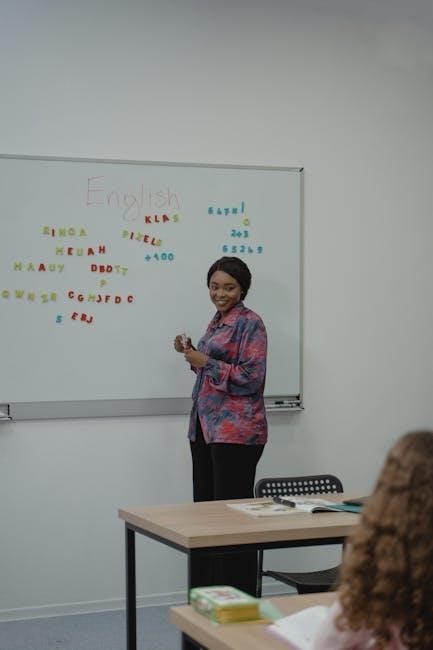
These techniques aren’t presented as rigid rules‚ but as adaptable strategies. Mastering them allows teachers to proactively address common classroom challenges‚ such as disengagement or misunderstanding.
The emphasis on technique aims to create a more equitable learning environment‚ ensuring all students have opportunities to succeed. By consistently applying these methods‚ educators can cultivate a classroom culture of high achievement and intellectual curiosity.

Part 1: Check for Understanding
Part 1 of Teach Like a Champion 2.0 focuses on systematically gathering data on student mastery through six key techniques for accurate assessment.
Gathering Data on Student Mastery
“Teach Like a Champion 2.0” emphasizes that truly knowing if students understand requires more than simply asking if they do. The initial step in effective teaching‚ as outlined in the PDF‚ is actively gathering data on their actual mastery of the material.
This isn’t about passively observing; it’s about employing specific techniques to reliably determine what students know and where they struggle. The book stresses moving beyond self-reporting‚ which is often inaccurate‚ and instead utilizing methods that provide concrete evidence of understanding.
This foundational section lays the groundwork for subsequent techniques‚ ensuring teachers base their instruction on factual student performance‚ not assumptions.
Technique 1: REJECT SELF-REPORT
“Reject Self-Report”‚ the first technique in “Teach Like a Champion 2.0”‚ directly addresses the unreliability of asking students if they understand. The PDF argues that students frequently overestimate their comprehension‚ leading teachers to misjudge actual mastery.
Simply accepting a “yes” or a nod isn’t sufficient. Instead‚ teachers must actively verify understanding through observable evidence. This technique isn’t about distrusting students‚ but recognizing the cognitive biases that prevent accurate self-assessment.
The book advocates for consistently following up with targeted questions or requiring students to demonstrate their knowledge‚ effectively bypassing the pitfalls of self-reporting.
Technique 2: TARGETED QUESTIONING
“Targeted Questioning”‚ as outlined in the “Teach Like a Champion 2.0” PDF‚ moves beyond general inquiries about understanding. It emphasizes crafting specific questions that pinpoint precise knowledge gaps. Avoid broad questions like “Does everyone understand?” which invite inaccurate self-reports.
Instead‚ the technique champions questions that require students to articulate how or why‚ forcing them to demonstrate genuine comprehension. These questions should be strategically sequenced‚ building upon prior knowledge and progressively increasing in complexity.
Effective targeted questioning‚ according to the book‚ reveals nuanced misunderstandings and guides students toward deeper learning.
Technique 3: STANDARDIZE THE FORMAT
“Standardize the Format”‚ detailed in the “Teach Like a Champion 2.0” PDF‚ advocates for consistent question structures during checks for understanding; This technique minimizes cognitive load‚ allowing students to focus on content rather than deciphering how to respond.

By employing predictable phrasing – such as “What’s the first step?” or “Explain your reasoning” – teachers create a routine that streamlines the assessment process. This consistency also facilitates easier tracking of student responses and identification of common errors.
The PDF emphasizes that standardized formats yield more reliable data on student mastery.
Technique 4: TRACKING‚ NOT WATCHING
As outlined in the “Teach Like a Champion 2.0” PDF‚ “Tracking‚ Not Watching” encourages teachers to actively monitor who knows the material‚ not simply observe general student engagement. This involves a systematic approach to noting responses – using a seating chart or roster – to pinpoint specific areas of strength and weakness.
Instead of relying on subjective impressions‚ teachers create a concrete record of student participation. This data-driven approach allows for targeted interventions and adjustments to instruction. The PDF stresses that efficient tracking maximizes the value of check-for-understanding moments.
Technique 5: SHOW ME
The “Teach Like a Champion 2.0” PDF introduces “Show Me” as a technique to move beyond verbal affirmation of understanding. Instead of simply asking “Do you understand?”‚ teachers request students to physically demonstrate their knowledge – writing an answer‚ manipulating objects‚ or performing a skill.
This method‚ detailed in the resource‚ provides concrete evidence of mastery‚ revealing gaps that verbal responses might conceal. “Show Me” forces active recall and application‚ strengthening learning. The PDF emphasizes that this technique is particularly effective for procedural knowledge and skills‚ offering a more reliable assessment than self-reporting.
Technique 6: AFFIRMATIVE CHECKING
According to the “Teach Like a Champion 2.0” PDF‚ Affirmative Checking combats the ambiguity of simply asking “Does everyone understand?”. This technique requires all students to actively demonstrate understanding‚ not just those willing to volunteer.
Instead of a general question‚ teachers pose a specific question and require a unanimous‚ non-verbal signal – like a thumbs-up or raised hand – from every student. The PDF highlights that this ensures 100% accountability and quickly identifies students who may be struggling‚ prompting immediate clarification and support. It’s a powerful tool for gauging collective comprehension.
Reflection and Practice (Check for Understanding)
The “Teach Like a Champion 2.0” PDF emphasizes that mastering “Check for Understanding” techniques requires deliberate practice and self-reflection. Educators should consistently apply methods like Reject Self-Report and Affirmative Checking‚ analyzing their effectiveness in revealing true student mastery.
Reflection should focus on identifying patterns – which techniques consistently uncover misunderstandings? How can questioning be refined for greater precision? The PDF suggests experimenting with different approaches and seeking feedback from colleagues. Utilizing the “Useful Tools” section‚ teachers can implement strategies to systematically track and improve their ability to accurately assess student learning.
Useful Tools for Assessing Mastery
The “Teach Like a Champion 2.0” PDF doesn’t explicitly detail specific digital tools‚ but advocates for systematic data collection. Teachers can adapt existing classroom tools – exit tickets‚ quick quizzes‚ observation checklists – to align with the techniques.
Consider creating a simple tracking spreadsheet to record responses from Targeted Questioning or Show Me. This allows for quick identification of common errors. The book encourages a focus on how data is gathered and analyzed‚ rather than relying on complex technology. Prioritizing consistent application of techniques like Tracking‚ Not Watching will yield more valuable insights than any tool alone.

Part 2: Acting on Data & Culture of Error
“Teach Like a Champion 2.0” emphasizes proactively planning for student errors and cultivating a classroom where mistakes are seen as learning opportunities.
Acting on the Data and the Culture of Error
“Teach Like a Champion 2.0” dedicates significant attention to how educators respond to student work and mistakes. It’s not enough to simply gather data on understanding; teachers must actively utilize this information to refine instruction and build a supportive classroom environment.
This section introduces techniques like PLAN FOR ERROR‚ anticipating common misconceptions‚ and CULTURE OF ERROR‚ establishing a space where students feel safe taking risks. EXCAVATE ERROR encourages teachers to deeply analyze mistakes to uncover underlying issues‚ while OWN AND TRACK promotes accountability for addressing errors systematically.
The core idea is to shift the perception of errors from failures to valuable data points‚ informing both immediate adjustments and long-term instructional planning. This proactive approach fosters growth and resilience in students.
Technique 7: PLAN FOR ERROR
“Plan for Error‚” as detailed in “Teach Like a Champion 2.0‚” emphasizes proactive anticipation of common student mistakes. Instead of being caught off guard‚ effective teachers predict where students are likely to struggle and prepare responses accordingly.
This involves identifying potential misconceptions‚ crafting clarifying questions‚ and even preparing alternative explanations or examples. It’s about designing lessons with built-in opportunities to address errors before they derail understanding.
Planning for error isn’t about lowering expectations; it’s about strategically preparing to support students through challenges‚ maximizing learning opportunities‚ and fostering a resilient mindset.
Technique 8: CULTURE OF ERROR
“Culture of Error‚” a core principle from “Teach Like a Champion 2.0‚” advocates for establishing a classroom environment where mistakes are viewed as valuable learning opportunities‚ not failures. This involves explicitly teaching students that errors are a natural part of the learning process.
Teachers should model vulnerability by admitting their own mistakes and demonstrating how to learn from them. Positive reinforcement for effort and risk-taking‚ rather than solely focusing on correct answers‚ is crucial.
A strong culture of error encourages students to embrace challenges and persevere through difficulties‚ fostering intellectual growth.
Technique 9: EXCAVATE ERROR
“Excavate Error‚” detailed in “Teach Like a Champion 2.0‚” moves beyond simply acknowledging mistakes to actively investigating why they occur. This technique urges teachers to treat errors as rich sources of diagnostic information about student understanding.
Instead of immediately correcting a student‚ the teacher probes deeper‚ asking clarifying questions to uncover the underlying misconceptions or flawed reasoning. This process involves carefully analyzing the error pattern to identify common struggles within the class.
By excavating errors‚ teachers can tailor instruction to address specific learning gaps and prevent future misunderstandings.
Technique 10: OWN AND TRACK
“Own and Track‚” as presented in “Teach Like a Champion 2.0‚” emphasizes a teacher’s responsibility for student errors‚ not as failures‚ but as opportunities for growth. This technique involves the teacher taking ownership of patterns of misunderstanding observed in the classroom.
Rather than attributing errors to student deficiencies‚ teachers meticulously track recurring mistakes to identify areas where instruction needs refinement. This data-driven approach allows for targeted interventions and adjustments to lesson plans.
Consistent tracking provides valuable insights into student learning and informs future instructional decisions‚ fostering a culture of continuous improvement.
Reflection and Practice (Error & Data)
“Teach Like a Champion 2.0” stresses that effectively acting on data and cultivating a culture of error requires deliberate reflection and consistent practice. Educators should regularly analyze tracked error patterns‚ asking themselves what instructional adjustments are needed.
This isn’t simply about identifying mistakes‚ but understanding why they occur. Practice involves proactively planning for common errors‚ designing lessons that anticipate and address potential misunderstandings.
Furthermore‚ teachers must consistently model a growth mindset‚ framing errors as learning opportunities for both themselves and their students‚ fostering resilience and a positive learning environment.
Useful Tools for Error Analysis
“Teach Like a Champion 2.0” doesn’t explicitly list specific software‚ but advocates for systematic data collection. Simple tools like error logs – spreadsheets tracking common mistakes and student names – are highly effective.
Color-coding errors by type can reveal patterns. Exit tickets‚ designed to quickly assess understanding‚ provide valuable error data. Analyzing student work samples‚ focusing on recurring errors‚ is crucial.
Furthermore‚ utilizing questioning techniques like “Excavate Error” (identifying the root cause of a mistake) provides qualitative data. Regularly reviewing this data informs instructional adjustments and targeted interventions.

Part 3: Academic Ethos & Lesson Planning
“Teach Like a Champion 2.0” emphasizes high expectations through techniques like “No Opt Out” and meticulous planning using the “4 Ms” framework.
Setting High Academic Expectations
“Teach Like a Champion 2.0” dedicates a significant portion to establishing a strong academic ethos within the classroom. This section introduces techniques designed to ensure all students are held accountable and challenged to reach their full potential.
Key techniques include “No Opt Out‚” a strategy that prevents students from avoiding questions‚ forcing engagement and deeper understanding. “Right is Right” stresses the importance of accuracy and precision in student responses‚ while “Stretch It” encourages students to elaborate and expand upon their initial answers.
Furthermore‚ “Format Matters” highlights the value of clear and organized communication‚ and “Without Apology” empowers teachers to maintain high standards without feeling the need to constantly soften expectations; These techniques collectively aim to cultivate a classroom culture of rigor and achievement.
Technique 11: NO OPT OUT
“No Opt Out‚” as detailed in “Teach Like a Champion 2.0‚” is a powerful technique for maximizing student engagement and ensuring accountability. It fundamentally prevents students from being allowed to simply say “I don’t know” and avoid participating in a discussion.
Instead‚ the teacher strategically redirects the question‚ perhaps to a classmate for assistance‚ before returning to the original student. This fosters a supportive environment where students are encouraged to grapple with challenging concepts.
The goal isn’t to punish students for not knowing‚ but to ensure they actively participate in the learning process and build confidence through supported struggle and eventual understanding.
Technique 12: RIGHT IS RIGHT
“Right is Right‚” a core principle from “Teach Like a Champion 2.0‚” emphasizes the importance of celebrating and reinforcing correct answers with genuine enthusiasm. It’s about making correctness visible and desirable within the classroom culture.
This isn’t simply acknowledging a correct response; it’s about explicitly praising the thinking behind it‚ modeling precision‚ and setting a high bar for academic excellence.
Teachers are encouraged to avoid diminishing correct answers with qualifiers or moving on too quickly‚ instead allowing the correctness to resonate and inspire other students.
Technique 13: STRETCH IT
“Stretch It”‚ detailed in “Teach Like a Champion 2.0‚” advocates for extending student responses beyond simple recall. The goal is to push students to elaborate‚ provide evidence‚ and demonstrate deeper understanding of the material;
Instead of accepting a minimal correct answer‚ teachers using this technique ask follow-up questions like “Why is that?” or “How do you know?” encouraging students to articulate their reasoning and build upon their initial responses.
This fosters critical thinking and prevents superficial learning‚ ultimately leading to more robust comprehension.
Technique 14: FORMAT MATTERS
As outlined in “Teach Like a Champion 2.0‚” “Format Matters” emphasizes the importance of consistent and clear presentation of information. This technique asserts that how something is presented significantly impacts student understanding and retention.
Specifically‚ it advocates for standardized formats for note-taking‚ problem-solving‚ and written responses. This reduces cognitive load‚ allowing students to focus on the content itself rather than deciphering the presentation.
Consistent formatting also aids in review and reinforces key concepts‚ creating a more structured and effective learning experience.
Technique 15: WITHOUT APOLOGY
“Without Apology‚” a core tenet of “Teach Like a Champion 2.0‚” challenges educators to present challenging material with confidence and conviction. This technique discourages softening instructions or preemptively apologizing for the difficulty of the content.
The rationale is that lowering expectations or expressing doubt undermines the students’ belief in their ability to succeed. Presenting material “without apology” conveys high expectations and a belief in students’ potential.
It’s about maintaining academic rigor and fostering a culture where challenge is embraced‚ not feared‚ ultimately leading to greater student achievement.
Planning for Success
“Teach Like a Champion 2.0” dedicates a significant portion to effective lesson planning‚ recognizing it as foundational to impactful teaching. This section introduces techniques designed to move beyond superficial preparation and create truly robust lessons.
Key strategies include “Begin with the End‚” focusing on desired outcomes‚ and the “4 Ms” – Map‚ Model‚ Monitor‚ and Maintain – providing a structured planning framework.
Further techniques like “Post It” and “Double Plan” emphasize clarity and anticipating potential challenges‚ ensuring teachers are well-prepared to facilitate meaningful learning experiences.
Technique 16: BEGIN WITH THE END
“Begin with the End”‚ a core principle from “Teach Like a Champion 2.0”‚ advocates for planning lessons by first defining the precise student outcomes desired. This isn’t simply stating a topic‚ but articulating what students will know‚ understand‚ and be able to do by the lesson’s conclusion.
This technique encourages teachers to work backward‚ designing activities and assessments that directly measure achievement of these predetermined goals.
By starting with the end in mind‚ educators ensure focused instruction and avoid aimless teaching‚ maximizing student learning and demonstrable progress.
Technique 17: 4 Ms
The “4 Ms” – Model‚ Monitor‚ Manage‚ and Motivate – represent a comprehensive framework for effective lesson delivery‚ detailed in “Teach Like a Champion 2.0”. Model involves demonstrating skills and concepts clearly. Monitor focuses on actively checking for student understanding through techniques like targeted questioning.

Manage encompasses maintaining a productive learning environment‚ and Motivate centers on engaging students and fostering enthusiasm.
These interconnected elements ensure a dynamic and impactful lesson‚ maximizing student engagement and achievement throughout the learning process.
Technique 18: POST IT

“POST IT”‚ as outlined in “Teach Like a Champion 2.0”‚ advocates for prominently displaying key information – objectives‚ agendas‚ vocabulary‚ or essential questions – in the classroom. This practice creates a visually accessible learning environment‚ reinforcing crucial content for students.
By consistently posting these elements‚ teachers provide a clear roadmap for learning‚ enhancing student understanding and promoting self-directed learning.
This simple yet powerful technique fosters a culture of transparency and accountability‚ ensuring students are always aware of the lesson’s focus and expectations.
Technique 19: DOUBLE PLAN
“DOUBLE PLAN”‚ a core strategy from “Teach Like a Champion 2.0”‚ emphasizes the importance of meticulously planning lessons not just for content delivery‚ but also for potential student responses and challenges. This involves anticipating likely misconceptions and preparing targeted questions or alternative explanations.
Teachers should first plan the ideal lesson flow‚ then “double plan” by considering how the lesson might deviate and proactively preparing for those scenarios.
This proactive approach minimizes disruptions and ensures teachers are equipped to address diverse learning needs effectively‚ maximizing instructional time.
Reflection and Practice (Planning)
Reflection and Practice‚ concerning lesson planning from “Teach Like a Champion 2.0”‚ encourages educators to critically evaluate their planning process. Consider how effectively techniques like “Begin with the End” and “Double Plan” were implemented.
Analyze whether the 4 Ms (Most important point‚ Misconceptions‚ Materials‚ and Monitoring) were adequately addressed.
Practice involves deliberately applying these techniques to future lesson designs‚ seeking feedback from colleagues‚ and refining plans based on observed student engagement and mastery.
Consistent reflection and practice are vital for continuous improvement.
Useful Tools for Lesson Planning
“Teach Like a Champion 2.0” advocates for structured lesson planning‚ and several tools can aid this process. Utilizing a lesson plan template incorporating the “4 Ms” – Most important point‚ Misconceptions‚ Materials‚ and Monitoring – is crucial.
Checklists based on techniques like “Begin with the End” and “Post It” ensure key elements aren’t overlooked.
Collaborative planning with colleagues‚ utilizing shared documents or planning software‚ fosters diverse perspectives.
Regularly reviewing and refining lesson plans based on student data and feedback is essential for continuous improvement and impactful instruction.
Lesson Structure Overview
“Teach Like a Champion 2.0” emphasizes a deliberate lesson structure for maximizing student learning. While the book doesn’t prescribe a rigid format‚ it champions intentionality in sequencing activities.
Effective lessons often begin with a clear objective (“Begin with the End”)‚ followed by focused instruction and guided practice.
Regular checks for understanding (Part 1 techniques) are woven throughout‚ ensuring students are actively engaged and mastering concepts.
Independent practice and closure activities solidify learning and prepare students for future lessons‚ creating a cohesive and impactful educational experience.